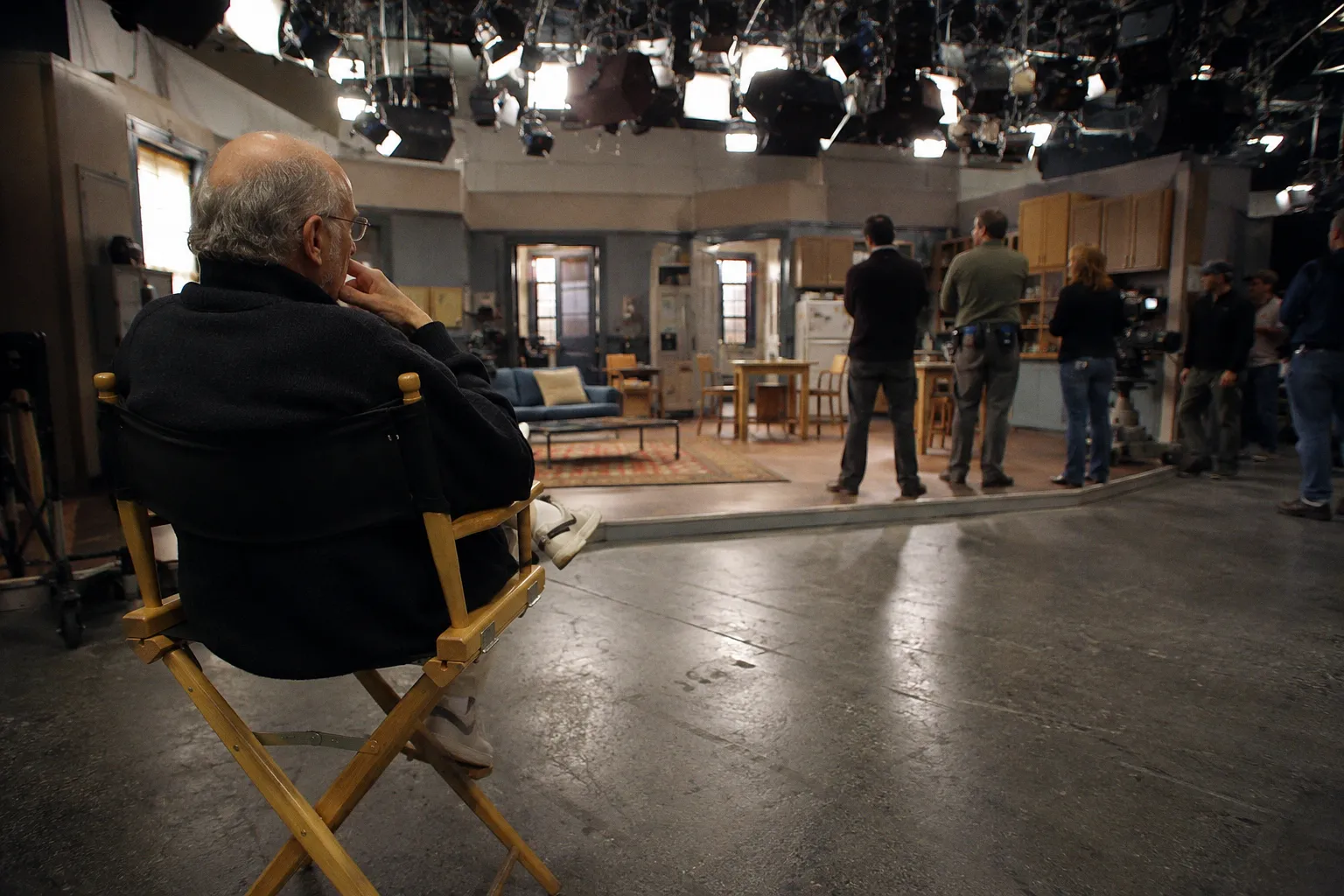
A problem is introduced in the cold open, escalated across three acts, and resolved before the closing credits roll. We have internalized this scaffolding so completely that we anticipate the laugh before it lands, predict the tag at the end of the episode, sense the moment where the camera will cut to the title card. That predictability is not a flaw of the form. It is, increasingly, the reason the best sitcoms to watch remain in heavy rotation long after their original broadcast runs have ended.
Nielsen reported that U.S. audiences streamed 21 million years' worth of video content in 2023, a 21% jump over the previous year. A striking share of those billions of hours did not flow to fresh prestige dramas or buzzy limited series. It went to the same handful of sitcoms we have already seen dozens of times — the rerun loop made frictionless by the streaming interface. Eighty-seven percent of Americans, according to a CableTV.com survey, claim a designated comfort show. The question worth asking is not whether we rewatch, but what we are actually doing when we press play on the same episode of The Office, Friends, or Seinfeld for the fifteenth, the fiftieth, or the hundredth time.
The Architecture of Comfort: Cognitive Ease and the Sitcom Form
The sitcom's structural predictability is the heart of its emotional contract. The laugh track — long derided by critics, but persistently retained across decades of broadcast and streaming — performs a specific cognitive function: it tells us where to feel. When the studio audience laughs, the viewer's brain registers the emotional cue before conscious processing fully engages. Media psychologists describe this as "perceptual fluency," the ease with which the brain processes familiar stimuli. Familiar narratives require less working memory; they ask less of us. A drama demands our attention to decode its layered meanings; a sitcom, watched for the tenth time, hands us the meaning in advance and lets us rest inside it.
Twenty-two minutes is, crucially, a contained emotional experience. Unlike the prestige drama that asks for ten-hour commitments and ends on bleakness, the sitcom promises resolution. Problems may escalate — the inappropriate behavior, the romantic misadventure, the eternal indecision at the coffee house — but the half-hour guarantees a return to baseline. That contract, repeated across years of viewing, becomes a form of cognitive refuge. We know what is coming. We know how it ends. We know the warmth will be there, waiting for us in the next episode and the next and the next.
The sitcom's 22-minute architecture is not a constraint. It is the form's quiet gift — a contract of resolution we can rely on when the wider world refuses to deliver one.
The visual grammar of the multi-camera sitcom reinforces this predictability in subtle ways. The wide master shot holds longer than any cinematographer trained in cinema verité would tolerate. Reactions are lingered over. Pauses are allowed to breathe. The pacing does not demand to be decoded; it asks only to be inhabited. This is why the form translates so readily to the background of a working afternoon or a sleepless night — it requires nothing from us, and it punishes nothing when our attention drifts.
The Mere-Exposure Effect: Why Familiarity Restores Us
The psychological literature is unambiguous on one point: we prefer what we recognize. The "mere-exposure effect," first articulated in the 1960s by psychologist Robert Zajonc, describes the tendency to develop preferences for stimuli simply because we have encountered them before. Applied to television, this means the hundredth viewing of a familiar sitcom episode carries a different emotional weight than the first — not because the episode has changed, but because our relationship to it has.
This is what Dr. J.L. Derrick operationalized in a 2013 study published in Social Psychological and Personality Science. Immersing oneself in familiar fictional worlds, the research found, restores depleted self-control and mental energy without requiring effortful cognitive processing. The sitcom, watched for the dozenth time, asks nothing of the brain except recognition. The result, the data suggested, is a measurable replenishment of the cognitive resources that daily stress has drained.
CableTV.com's survey of 1,000 Americans reinforces the picture: 60% of comfort-show viewers — three in five — reported experiencing anxiety. The correlation is striking, and it complicates the lazy critique that comfort viewing is a symptom of intellectual passivity. It is, more accurately, a deliberate form of emotional regulation, deployed most heavily by those who most need it. We press play not because we cannot find anything new, but because we have learned which twenty-two minutes reliably settle the nervous system.
The Multi-Billion Minute Rewatch Phenomenon
The streaming data confirms what viewers have been telling researchers for years. The legacy comfort loop, when measured in viewing minutes, dwarfs most of what the streaming era has produced. The figures, drawn from Nielsen's annual streaming reports, are striking:
| Series | Year | Viewing Minutes | Platform |
|---|---|---|---|
| The Office | 2020 | 57.1 billion | Netflix |
| The Big Bang Theory | 2023 | 27.8 billion | Max |
| Friends | 2023 | 25.0 billion | Max |
| Ted Lasso | 2023 | 16.9 billion | Apple TV+ |
The Office generated 57.1 billion viewing minutes on Netflix in 2020, making it the most-streamed show of that pandemic year. The numbers did not soften in the post-lockdown era. The Big Bang Theory accumulated 27.8 billion viewing minutes on Max in 2023; Friends added another 25 billion on the same platform. A billion minutes equals roughly 1,900 years of continuous viewing.
The numbers are not noise. They are the clearest signal we have that the sitcom loop has become the dominant mode of television consumption for an entire generation of viewers.
This is not niche behavior. It is mainstream television consumption at its most concentrated, and it is concentrated, overwhelmingly, on sitcoms that were already considered legacy titles when streaming began. What the data suggests, in effect, is that the most-watched television of the streaming era is not the new prestige drama we keep hearing about but the old comfort rerun we keep quietly returning to.
Parasocial Bonds: Fictional Friends as Social Surrogates
There is another layer to the comfort loop, and it is older than streaming. The sitcom, perhaps more than any other television form, invites parasocial attachment — those one-sided emotional bonds we form with fictional characters. We do not know Michael Scott, but we feel we do. We have watched him grow, fail, propose, recover. We have opinions about his management style. We worry about him in ways that would feel absurd if applied to characters from a drama we had only seen once.
Media psychologists describe these bonds as social surrogates — relationships that buffer against loneliness and stress without requiring reciprocal engagement. For viewers navigating social isolation, chronic anxiety, or simply the accumulated friction of modern life, the regular presence of characters we have known for years becomes a form of companionship. The laugh track performs a specific function here, too: it places us inside an imagined social space. The studio audience laughs, and we are, briefly, laughing alongside them. The illusion is generous precisely because it asks for nothing back.
Streaming has not invented this dynamic, but it has amplified it. The parasocial relationship is now portable and effectively infinite. We can bring the ensemble from Friends into a hospital waiting room, onto a late-night commute, into the quiet hours before sleep. The sitcom's emotional warmth is no longer bound to its original broadcast schedule. It travels with us, available on demand, the same characters in the same rooms saying the same lines we have heard a hundred times before. There is something almost theological about this portability — the sense that we carry our small congregation with us, and that it convenes whenever we ask it to.
The Peacock Era and the Streaming Migration
The economic logic of the comfort loop has not been lost on the studios that own these catalogs. NBCUniversal paid $100 million per year — $500 million total across five years — to acquire exclusive domestic streaming rights to The Office when the show left Netflix for Peacock in 2021. By that measure, each of the show's 201 episodes was effectively priced at nearly $2.5 million in licensing fees alone, before any production or marketing costs were factored in. The investment reflects a clear industry bet: that the comfort loop is durable, profitable, and capable of anchoring an entire streaming platform.
The wager appears to be paying off. Average Peacock viewers, according to NBCUniversal's own reporting, watch 59 episodes of The Office — nearly a third of the entire series — and many continue far beyond that. The show has become, in streaming-era terms, the closest thing television has to background infrastructure. It plays while people work, while people cook, during the sleepless hours before dawn. It is not, in most cases, the only thing being watched; it is the steady, undemanding layer beneath everything else, the cognitive white noise of contemporary American life.
This is the structural shift the streaming era has produced. Where broadcast television once built audience loyalty through appointment viewing, streaming has rebuilt it through unlimited access. The sitcom, with its episodic self-containment, is uniquely suited to this new architecture. No plot to catch up on. No character arcs to remember. No season-long arcs to lose track of. Just press play, and twenty-two minutes later, the world has been put briefly right.
From The Office to Ted Lasso: The Evolution of Feel-Good
It would be wrong, however, to treat the comfort loop as purely retrogressive. Ted Lasso, a series that did not exist before the streaming era, became the most-streamed original in the United States in 2023, accumulating 16.9 billion viewing minutes across its 34 episodes. For context, that figure is roughly 60% of what The Big Bang Theory managed across twelve seasons of broadcast reruns — a per-episode density that no legacy comfort show can match.
The show's particular genius — the unfailing kindness of its title character, the slow accumulation of small emotional victories — is in some ways an extension of the sitcom contract into a more contemporary register. Ted Lasso promises resolution, but it also promises warmth, and in a media landscape saturated with cynical antiheroes and bleak moral reckonings, that promise carries unusual weight. The thematic resonance of AFC Richmond is not the same as the thematic resonance of Central Perk or the Dunder Mifflin bullpen, but the function it serves in viewers' lives is recognizably adjacent. The locker room has become, for millions of viewers, the same kind of return address that the corner booth at the coffee house once was.
What Ted Lasso demonstrates is that the comfort loop is not bound to nostalgia. New sitcoms can become comfort shows, can accumulate the same parasocial depth, can be rewound and replayed until their dialogue becomes a private language between viewer and screen. The architecture matters less than the warmth. As long as a series delivers emotional predictability without demanding cognitive effort, it can enter the loop, and once it does, it tends to stay. The best sitcoms to watch, in other words, are not simply the funniest or the most awarded or the most critically canonized. They are the ones that have made themselves indispensable to the rhythm of our evenings, our commutes, our recoveries from bad days. They are the ones we reach for when we do not want to think, when we want the cognitive equivalent of a familiar armchair.
The comfort loop is not a failure of attention. It is, in fact, one of the most successful viewer-form relationships in the medium's history. Eighty-seven percent of us have a designated show. Sixty percent of comfort-show viewers in the survey reported experiencing anxiety — the very state the loop seems built to soothe. We stream billions of minutes of the same handful of series, year after year, building a private archive of small emotional certainties. The sitcom offers what no other form quite replicates — the promise that twenty-two minutes from now, everything will be resolved, the laugh track will land, the characters we love will still be there, recognizable and warm, asking nothing of us except that we show up. We do not watch these shows because we have nothing better to do. We watch them because, in a culture that increasingly refuses to promise resolution, they still do.