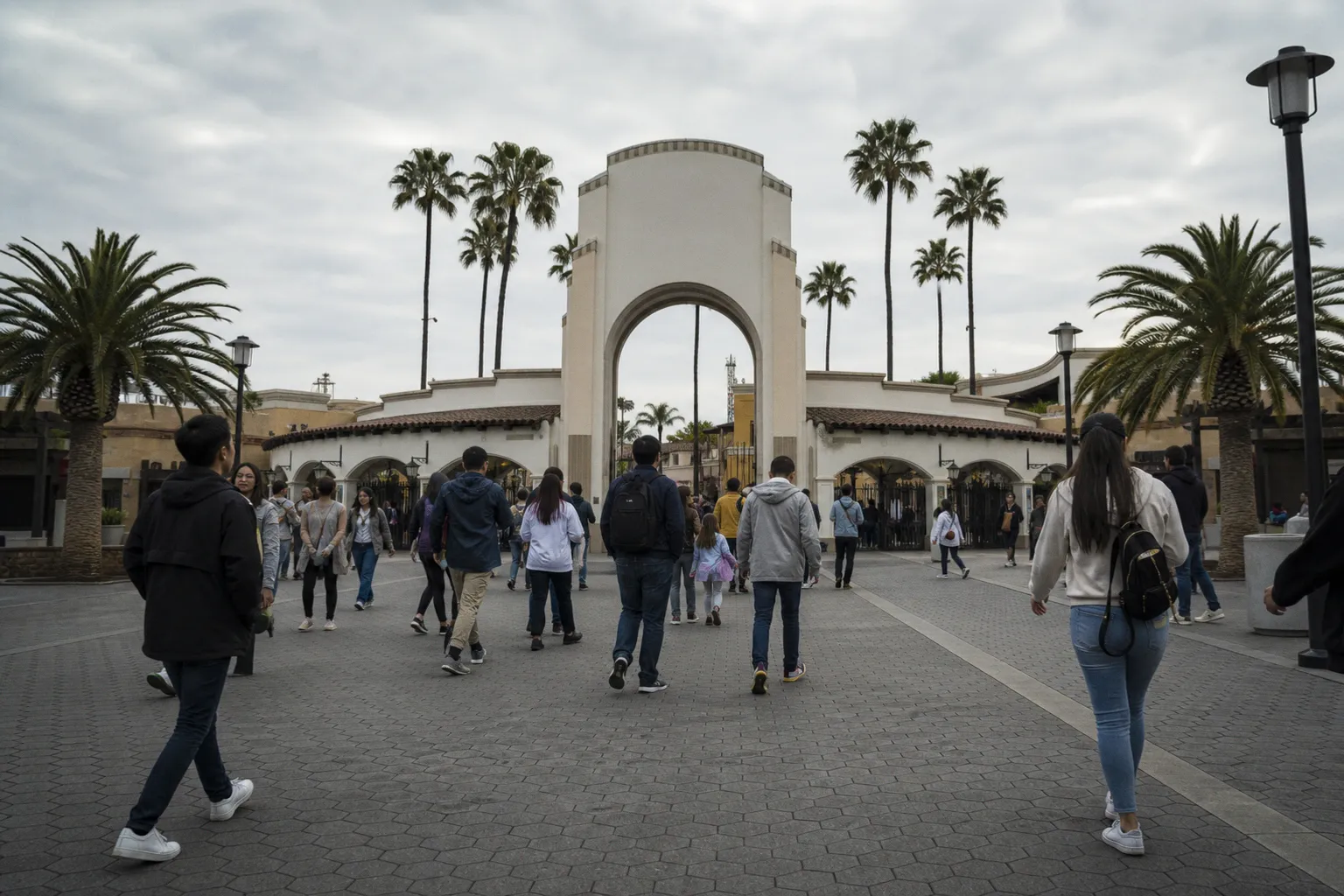
A Season That Ate the Calendar
Halloween Horror Nights will now open September 3rd and run through November 1st — a stretch that effectively conquers autumn. For those of us who've watched this event evolve from a niche scare-fest into Universal's most potent brand-extension tool, the earlier start feels inevitable. Orlando has long anchored its version to Labor Day Weekend; Hollywood is finally catching up to its own sibling.
What matters here isn't just the extra nights. It's the compression of the booking window. With the season launching earlier, the scramble for Express Passes and fall travel logistics intensifies. Theme park veterans on Reddit have already flagged the shift, and one imagines the annual-pass incentive — three additional months free on a 12-month membership, stretching to fifteen months through April 2026 — is designed to lock in commitment before the Halloween rush reshapes the market entirely. The pass also offers early or Express access to marquee events like Horror Nights itself, which reads less as a perk and more as a funnel.
Steel, Speed, and the Spectacle of Franchise Physics
The Fast & Furious: Hollywood Drift Coaster represents something we rarely discuss honestly: the theme park as a form of cinematic criticism. Every major coaster built around a film franchise is, in effect, an argument about what that franchise's visual grammar really means when stripped of editing and dialogue. High-speed action, photo opportunities, thematic fidelity — the language of the press release — masks a harder question. What does the Fast & Furious series feel like when the camera can't cut away?
We experience cinema in controlled darkness; a coaster offers no such mercy. The physics are literal. And this particular launch arrives under a shadow none of us anticipated: at Universal's Orlando resort, a 32-year-old man died after riding the dual-launch Stardust Racers coaster, with authorities attributing the death to multiple blunt impact injuries. The incident prompted an extensive safety review, updated signage, and eligibility checks. While it occurred in a different park, the scrutiny radiates outward. Universal is simultaneously promising the thrill of speed and managing the public's sharpened awareness of what speed can cost. The tension between spectacle and safety has always haunted the amusement industry; right now, that haunting feels unusually visible.
The Legal Layer No One's Discussing Over Lunch
Unfolding alongside the park announcements — and largely drowned out by them — is a courtroom drama that may shape what future Universal attractions even look like. Midjourney, the AI image-generation company, has petitioned a federal court to expand evidence discovery against Disney, Universal, and Warner Bros. Discovery. The company wants to know how each studio uses generative AI internally, arguing that the very practices the studios call "theft" when performed by outsiders may be standard procedure within their own walls.
A magistrate judge had previously limited disclosure to consumer-facing AI tools, but Midjourney is challenging that restriction before District Judge John A. Kronstadt. The company's attorney argues that if studios are developing internal image-generation systems for tasks like storyboarding, that evidence goes to the heart of fair use and clean hands defenses. The filing also notes that Disney announced a billion-dollar deal in late 2025 to provide characters to OpenAI's video generation service — a detail the original ruling reportedly omitted.
For anyone following how Hollywood's creative pipeline is being reshaped by automation, the visual spectacle of a new coaster and the invisible architecture of AI-driven production are two expressions of the same industrial logic. Universal wants our bodies in motion on its tracks; it also wants its stories generated faster, cheaper, and without the friction of human authorship. The contradiction may be the most honest thing about the whole operation.
Whether you're planning your Horror Nights route or simply watching the industry negotiate its future, 2026 at Universal is less a calendar than a diagnostic. The thrills are real. So is the anxiety underneath them. If your plans involve any serious theme-park endurance, incidentally, it's worth considering how you'll physically sustain several days of walking, standing, and adrenaline — a structured conditioning and recovery plan might serve you better than any Express Pass.