French film festivals: why they define global cinema prestige
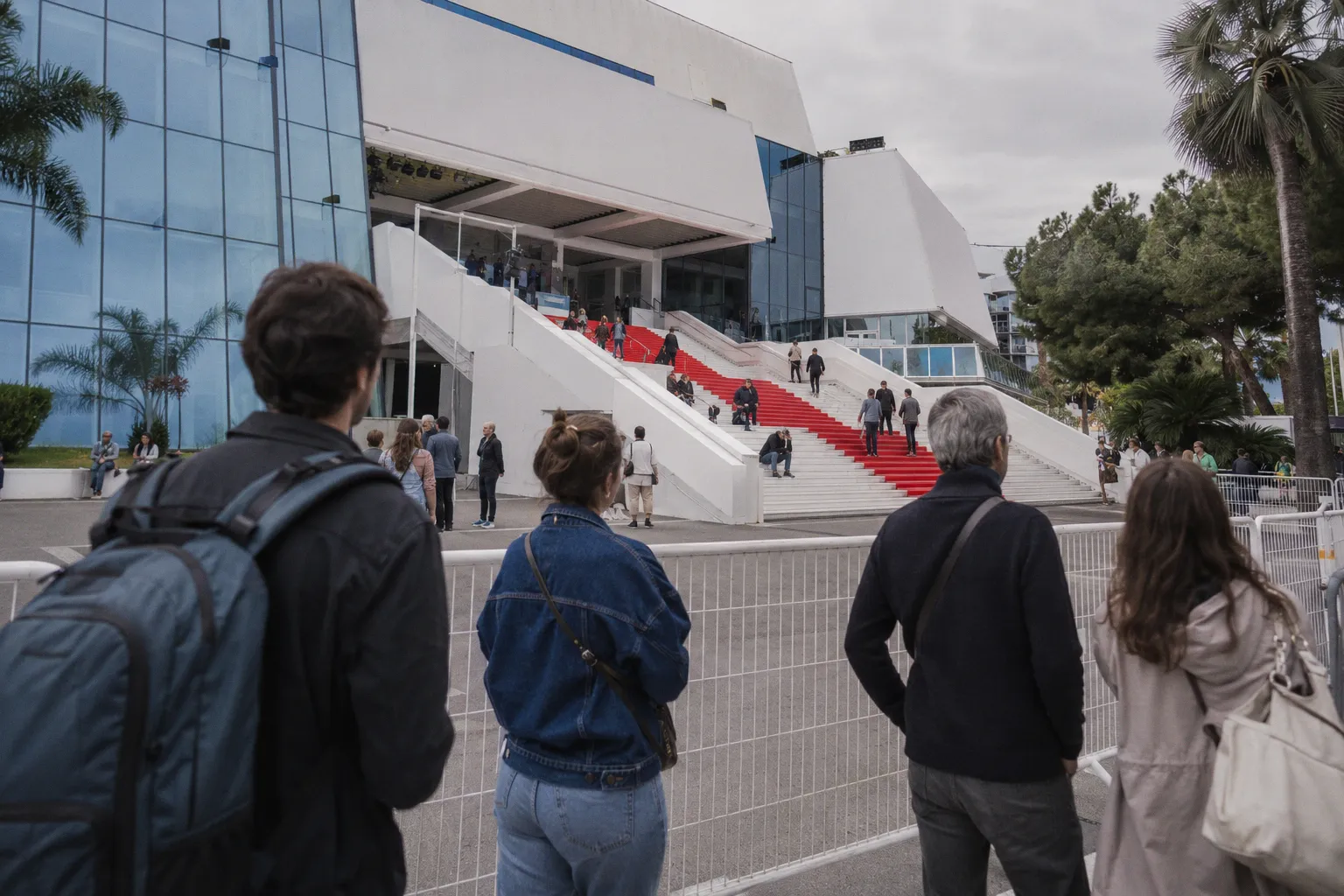
It reaffirmed, in front of a global television audience, a system of cultural gatekeeping that, since 1955, has decided which directors enter the canon and which remain on the periphery. We tend to discuss Cannes as if it were merely a glamorous red carpet — a backdrop for gowns, photocalls and well-rehearsed standing ovations — but the actual architecture of the Festival, its parallel industry market, its satellite events and its juried hierarchies constitute something far more consequential: a piece of living infrastructure that quietly governs what the rest of the world gets to see, finance and remember.
A festival is not a competition. It is an editorial board with a red carpet.
The Cannes Ecosystem: Beyond the Palme d'Or
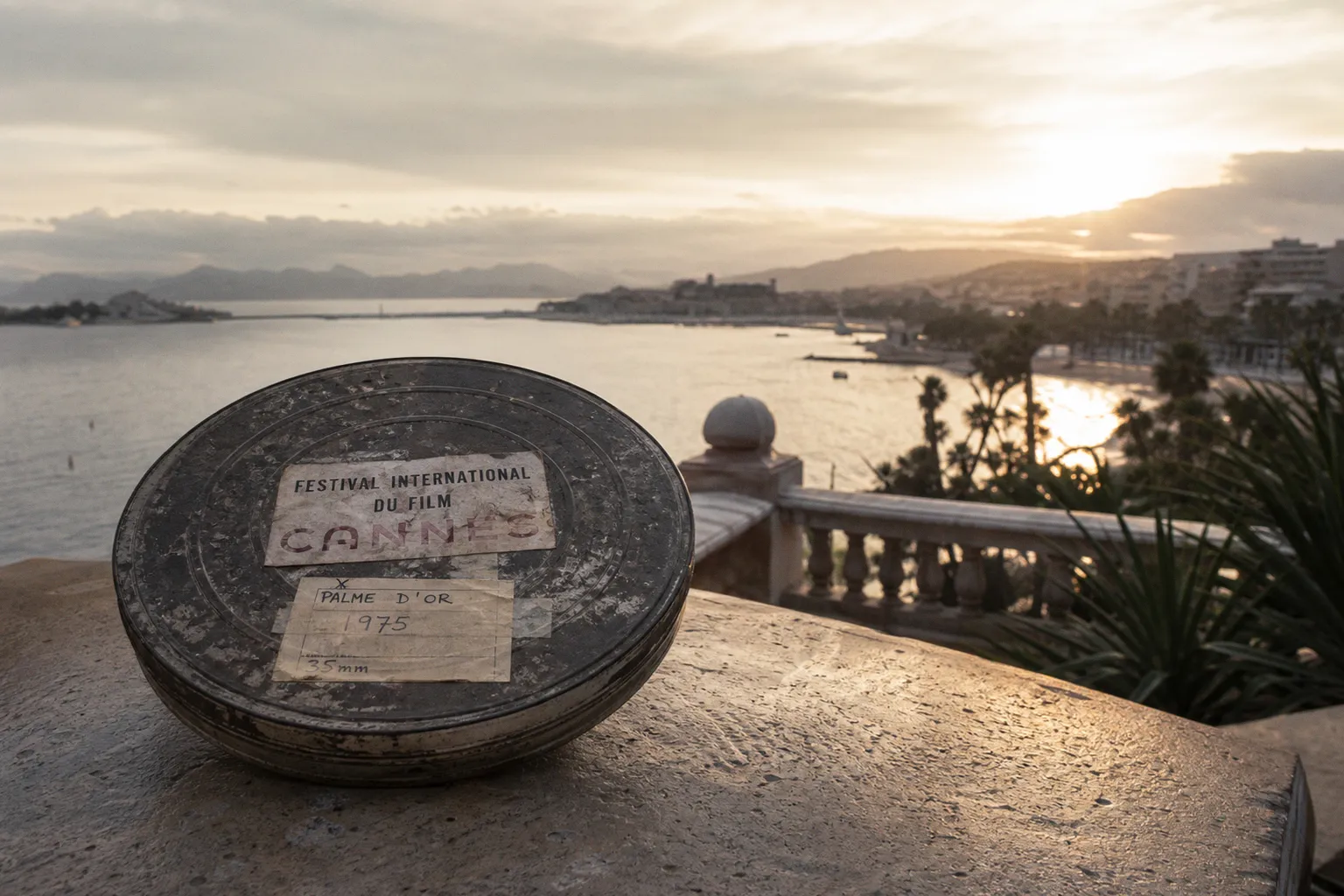
To understand why Cannes commands the attention it does, we have to move past the Croisette and look at the scale of the operation that runs underneath it. The Marché du Film, the industry's largest film market, operates alongside the Festival itself and draws more than 15,000 participants from 140 countries each year, alongside 600 exhibitors, 1,500 screenings and over 250 industry events, plus more than 20 dedicated industry programs. It is here, in the Palais' lower floors and the hotels of the Rue d'Antibes, that distribution deals are signed, co-production agreements are struck, and the financial scaffolding of the next two years of world cinema is quietly negotiated. The Palme d'Or — first awarded in 1955 to Delbert Mann's Marty, briefly replaced by a Grand Prix between 1964 and 1974, and reintroduced in its current form in 1975 — is the festival's most visible trophy, but it is the surrounding apparatus that gives Cannes its structural weight.
What we observe at the 2026 edition is the working of a layered system rather than a single competition. The Official Competition, juried this year under the presidency of South Korean filmmaker Park Chan-wook alongside Demi Moore, Ruth Negga, Chloé Zhao and Stellan Skarsgård, awarded Mungiu's Fjord the Palme d'Or and Andrei Zvyagintsev's Minotaure the Grand Prix. But running in parallel are Un Certain Regard, the Directors' Fortnight, Critics' Week, and the ACID program for independent distribution. Each of these sidebars operates as a filter with its own aesthetic sensibility, its own curatorial priorities and its own way of feeding talent into the broader industry conversation. A filmmaker might never compete for the Palme d'Or and still leave Cannes with a sales agent, three international press features and a credible path to the Academy Awards.
It is also worth remembering the rhythm: Cannes is not a one-week event. The Immersive competition for XR works runs alongside the Official Selection, and the festival's increasingly muscular documentary strand has become a parallel track in its own right. Each year the program is reshuffled to reflect where the industry is moving, and each reshuffle sends a signal that distributors, financiers and national cinema institutes read carefully. When Cannes elevates a form — animated features, hybrid documentaries, video essays — the rest of the international calendar tends to follow within a season.
Annecy and the Specialized Power of Animation
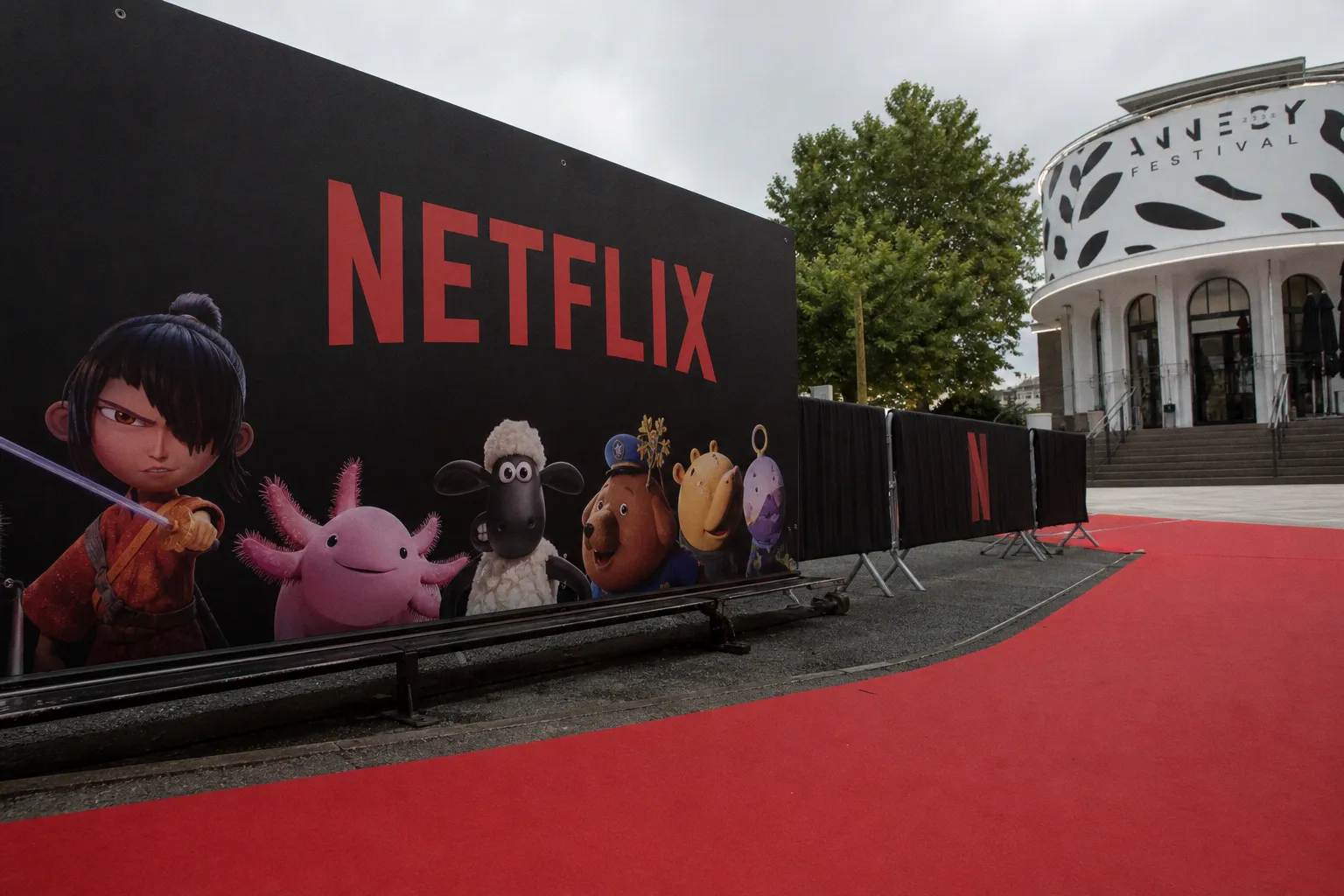
If Cannes is the generalist cathedral of French festival life, Annecy is its specialist monastery. Held each June on the shores of the lake that gives the town its name, the International Animation Film Festival has, over six decades, transformed itself into the most consequential annual gathering for the world's animated work, and the Official feature-film competition typically programs around 10 animated features each year drawn from a global pool. That narrowness is deliberate rather than incidental: in a field where animation is still routinely dismissed as a children's medium or a streaming commodity, Annecy's curated selectivity functions as an editorial argument. To screen here is to declare, in front of the world's most attentive animation professionals, that the form deserves the same rigorous critical attention as live-action cinema.
The scale is striking and worth sitting with. For its 2025 edition, Annecy reported receiving more than 4,000 films from 100 countries for its official selection process. The festival itself drew 18,200 participants from 118 countries, including 6,550 Mifa market professionals, 196 stands and 400 journalists. The Mifa — the International Animation Film Market — is the festival's commercial counterpart, the place where series pitches meet broadcasters, where feature projects secure completion financing and where emerging studios from Latin America, Africa and Southeast Asia make their first international industry contacts. For 2026, more than 880 project leaders applied to the Mifa Pitches, with the selection process typically giving about 40 projects a chance to pitch to industry professionals across feature, short, TV/special and immersive categories.
What we see at Annecy, then, is not merely a festival but a complete vertical structure for animation: a submission funnel, a curatorial gatekeeper, a public showcase, a market and a pitching forum — all gathered in one Alpine town for roughly a week each June. The festival's choices reverberate through the Oscar animation race, through European broadcaster slates, and through the streaming platforms that now treat Annecy's Official Selection as a programming shortlist. When Annecy elevates a particular technique — hand-drawn narrative feature, stop-motion auteurism, adult-skewing limited series — the rest of the animation industry's production slate adjusts within a year.
Clermont-Ferrand: The Global Gateway for Short-Form Storytelling
The third pillar of the French circuit is often overlooked in Anglophone coverage, partly because its subject — the short film — is treated as a stepping stone rather than a form in its own right. The Clermont-Ferrand International Short Film Festival, now in its 47th edition as of 2025, operates simultaneously as a FIAPF-accredited competitive event and as a qualifying festival for both the Academy Awards and the British Academy of Film and Television Arts awards. That dual status is not bureaucratic trivia: a Clermont-Ferrand selection can change the trajectory of a young director's career in ways that a slot at a non-qualifying festival simply cannot, because it converts critical attention into eligibility for the two most-watched prizes in the form.
Held annually from late January into early February in the Auvergne, Clermont-Ferrand functions as the international short-film industry's midwinter market. Distributors, festival programmers, short-film acquisition executives and commissioning editors converge on the city to scout emerging voices before the Cannes short-film Palme d'Or and the Oscar shortlist are finalized. The festival's programming — both national and international competitions, plus its lab component and its market activities — operates as an early-warning system for the year's most promising filmmakers. Its retrospective programs have also done serious curatorial work over the years to legitimize the short form as a serious artistic vehicle rather than a calling card, mounting major retrospectives that have shaped how the medium is taught, archived and discussed.
We should also note Clermont-Ferrand's role as an industry bridge: the festival's market activities connect short filmmakers to feature-length producers, often producing the first feature deal of a career that began with a six-minute film selected in Auvergne. In that sense, Clermont-Ferrand is less a destination than a transit hub — the place where short-form talent is converted into long-form opportunity.
The Economic Engine: How CNC Funding and Markets Drive Industry Standards
The prestige of French festivals is not a purely cultural phenomenon; it is built on a public-policy foundation that other national cinema systems have tried, with varying success, to replicate. France's National Centre for Cinema and the Moving Image — the CNC — administers a layered system of automatic and selective grants that supports production, distribution, exhibition, education and, crucially, festivals themselves. The CNC provides grants to both national and international festivals operating on French soil, including Cannes, and funds the international promotion of French film and television through agencies such as Unifrance and TV France International. This is the architecture that lets a small distributor in Lyon, a regional festival in Nantes, or the Lyon-based Lumière Festival operate with a stability their counterparts in many other countries cannot match.
This funding mechanism also explains why Cannes, Annecy and Clermont-Ferrand do not really compete with one another. They operate as a deliberately layered ecosystem: a generalist international showcase, a specialist animation industry hub, and a short-film qualifying festival, each feeding into the others and into the wider European festival circuit. Where most European nations host one tier-one festival — Venice in Italy, Berlin in Germany, Locarno in Switzerland, San Sebastián in Spain — France hosts three, each calibrated to a different segment of the industry. The Lumière Festival in Lyon, focused on heritage cinema and lifetime-achievement tributes, completes the picture as a complementary node in the ecosystem, and Cannes' parallel Directors' Fortnight and Critics' Week add two more internationally significant events within the same fortnight.
| Parameter | Cannes | Annecy | Clermont-Ferrand |
|---|---|---|---|
| Primary focus | Generalist international cinema | Animation (features, shorts, TV, XR) | Short film |
| Annual industry scale | Marché du Film: 15,000+ participants, 140 countries | Mifa: 6,550 professionals, 196 stands, 400 journalists (2025) | Midwinter market & lab |
| Exhibitor / screening footprint | 600 exhibitors, 1,500 screenings, 250+ events | 18,200 festival participants from 118 countries (2025) | National + international competitions |
| Submission scale | Curated invitation and submission | 4,000+ films from 100 countries (2025) | International competition submissions |
| Official feature selection | ~20 films in Competition; ~20 across sidebars | ~10 animated features (typical) | Competition programs curated shorts |
| Top prize | Palme d'Or (since 1955, current form since 1975) | Cristal for feature film | Grand Prix (international competition) |
| Awards qualification | Oscar-qualifying (feature, short) | Oscar-qualifying (short, feature animation) | Oscar & BAFTA qualifying |
| Public funding | CNC grants + private sponsorship | CNC + Haute-Savoie + market fees | CNC + Auvergne-Rhône-Alpes region |
The Jury Effect: Shaping Artistic Trends Through International Collaboration
What ultimately distinguishes the French festival system is not its budget, its market or its architectural elegance — it is the sustained practice of placing artistic decisions in the hands of international juries whose compositions themselves send signals to the industry. The 2026 Cannes jury, chaired by Park Chan-wook and including Moore, Negga, Zhao and Skarsgård, mixed auteur cinema with international screen presence, African-diasporic acting with European arthouse credibility. Annecy's juries rotate between animation directors, studio executives and critics, with deliberate attention to national and disciplinary balance. Clermont-Ferrand's juries are typically composed of working filmmakers, programmers and, often, a former Clermont-Ferrand laureate returning to vote.
This is the moment when the editorial board reveals its politics. A jury's verdict can, in a single evening, elevate a national cinema to international visibility — we have seen this with the Romanian new wave, the Korean renaissance and the recent Iranian minimalism — legitimize a marginal form, or reroute industry money toward a particular aesthetic. We see the result in the films that travel, the directors who get greenlit, and the cycles of taste that ripple through the international film press for the next eighteen months. Cannes does not merely observe cinema; it conditions the conditions under which cinema gets made.
There is also a subtler jury effect at work in the parallel sections. Un Certain Regard, Critics' Week and the Directors' Fortnight each run their own juries with their own aesthetic identities, and the cumulative effect is that Cannes produces roughly half a dozen distinct "winners" each edition, each with a different career trajectory ahead of them. A Caméra d'Or for a first feature, a Certain Regard prize for a mid-career formalist, a Critics' Week Grand Prize for a politically urgent debut — these are different prizes with different downstream consequences, and the system is designed so that more than one film, and more than one kind of filmmaker, can leave the Croisette with a tangible professional outcome.
Prestige is not a mood. It is an institution, with payrolls, regulations and juries that decide what the next decade of cinema looks like.
The 79th Festival de Cannes ran from May 12 to 23, 2026. Annecy published its 2025 figures on June 19 of that year. The 47th Clermont-Ferrand edition ran from January 31 to February 8, 2025. These dates, and the institutions that produced them, are not trivia. They are the punctuation marks of a calendar that filmmakers across five continents now structure their work around. When the CNC funds a festival, when the Marché du Film opens its doors, when Park Chan-wook rises to announce the Palme d'Or, the rest of world cinema watches — not because the French festivals sit at the top of any ranking, but because, over seventy years, they have built an ecosystem that combines public investment, market infrastructure, curatorial authority and juried legitimacy. It is that combined ecosystem, more than any individual trophy, that gives French festivals their distinctive position in the global calendar.
That is why, when we ask why French film festivals define global cinema prestige, the honest answer is not glamour. It is governance.