From Folklore to Filmography
Eggers has spent his career methodically claiming the architecture of myth. Witches in The VVitch, the undead in Nosferatu, something unspeakable at the edge of a lighthouse — each project a rigorous engagement with how cultures process dread through folklore. With Werwulf, co-written alongside Sjón (his collaborator on The Northman), he turns to lycanthropy, and the trailer suggests he's approaching it with the same ethnographic patience. The curse doesn't descend from nowhere; we're shown its origin — a young man following a stranger into a cave, a devilish ritual — and the trailer frames this not as genre exposition but as a visual thesis on how medieval communities understood contagion and moral corruption.
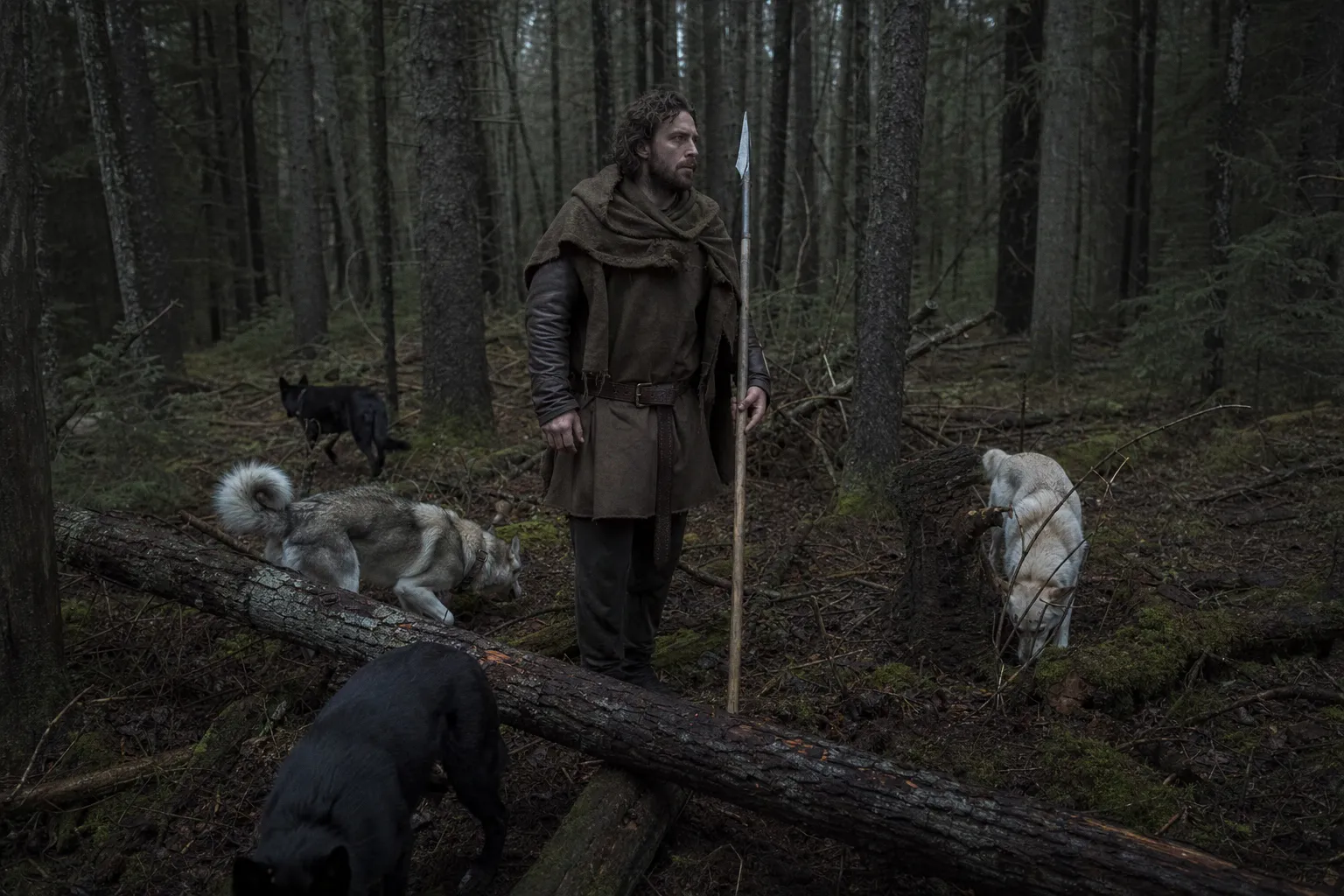
Aaron Taylor-Johnson stars as the farmer burdened by this inheritance. What we glimpse of his performance in the trailer is physical, inward — a body at war with itself — rather than the theatrical transformation sequences that typically sell werewolf pictures. Eggers appears far more interested in what the curse does to a village than what it does to a jawline.
The Ensemble as Texture
The supporting cast reads like a roll call of the director's creative constellation. Willem Dafoe, Ralph Ineson, Lily-Rose Depp — performers who've already proven their fluency in Eggers' particular dialect of historical horror. Anya Taylor-Joy's presence is confirmed but her transformation largely withheld from the marketing, a restraint that suggests the film intends to parcel its horrors carefully rather than front-load them. The trailer instead offers visceral tableaux: writhing bodies, blood across stone, corpses in the half-light. The visual grammar here owes less to Universal monster movies and more to medieval woodcuts — stark, unsparing, spiritually anxious.
What This Signals for Eggers' Trajectory
Each Eggers film has widened his canvas while narrowing his emotional focus. Werwulf appears to continue that pattern: a larger production, a recognisable ensemble, yet an aesthetic commitment to naturalistic lighting and historical fidelity that most studios would have sandblasted away by now. The full moon, one suspects, will illuminate those historically accurate farmhouses with a source cinematographer Jarin Blaschke won't be augmenting beyond necessity.
What we should track is how the film positions itself in an awards landscape that has historically been allergic to horror despite growing tolerance — and whether Eggers can achieve what few genre filmmakers manage: convincing the industry that a werewolf film set seven centuries ago is also, fundamentally, about the anxieties of now.