A Conflict Older Than the Franchise Itself
What we experience in the film's opening movements is a quiet inversion of everything the series has taught us to fear. The toys' nemesis isn't malice — it's irrelevance. Lily, nicknamed the "Lilypad," offers Bonnie instant gratification: games, colors, responsive touch. Jessie's hand-stitched charm, her ability to anchor a child's imagination through physical presence, suddenly feels archaic. The Guardian's analysis frames this as a natural, perhaps belated, evolution for a series that has always given voice to parental anxieties — from Andy growing up to the loneliness of the toy equivalent of empty-nesting. Now it's the glow of a screen that threatens to make playrooms obsolete.
Yet the filmmakers resist the easy binary. One of the film's more structurally elegant choices arrives when Jessie encounters a group of discarded, outdated devices — old phones, clunky gadgets — who share her neuroses about being replaced. What are these relics, the film asks, if not toys themselves? Objects onto which humans project desire, then abandon when something shinier appears. The visual grammar here is unmistakable: Pixar draws a direct line between plastic and polymer, between the manufactured and the digital, and finds less moral distance between them than we might expect.
No Screed, No Sermon
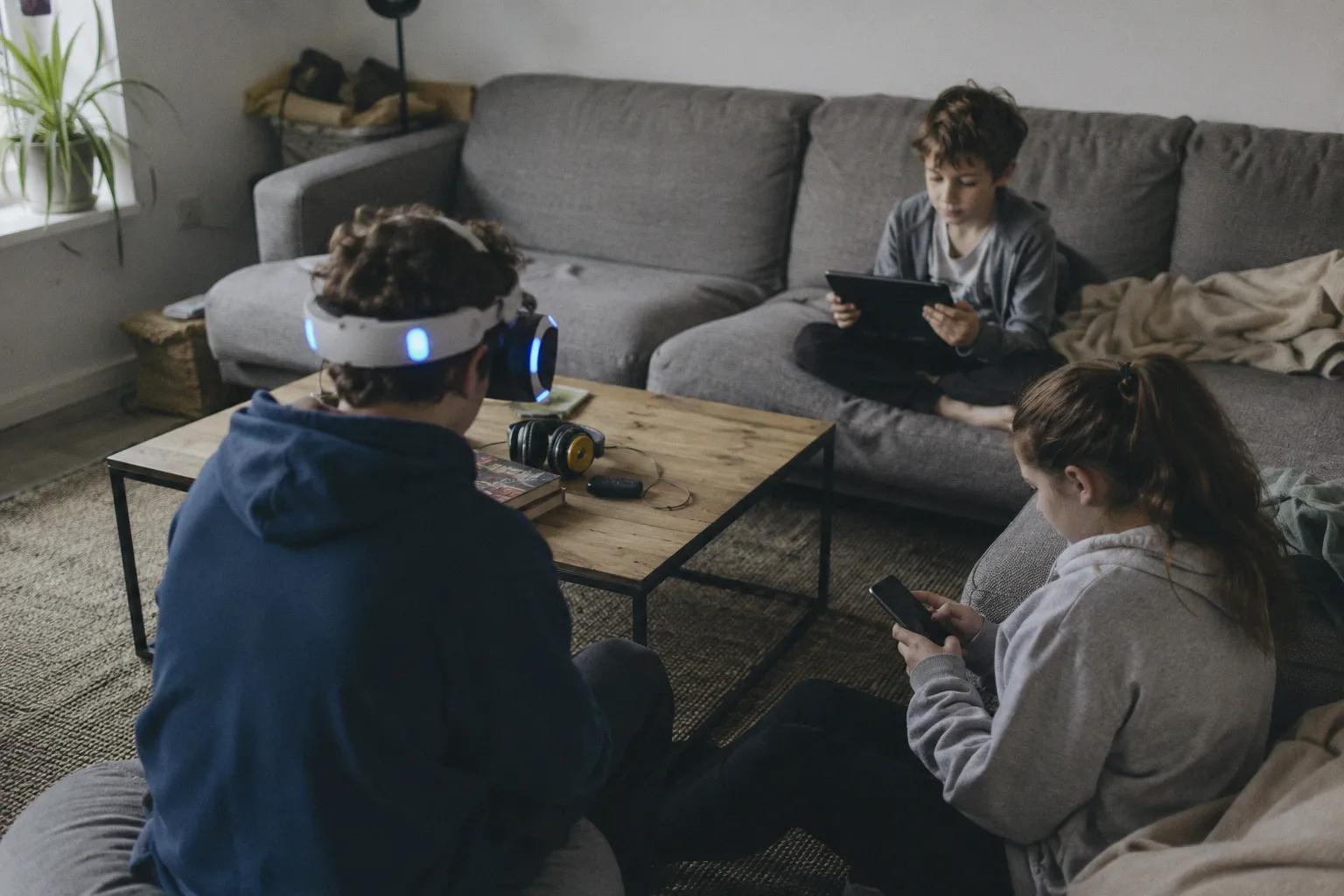
The studio's restraint deserves attention. A lesser film might have turned Lily into a villain, casting technology as the enemy of imagination. Instead, Toy Story 5 arrives at a more nuanced thematic resonance: the problem isn't the tablet itself, but what it displaces. When screen time replaces shared play, when algorithms substitute for a child's projected narrative onto a beloved object, something human erodes. The Cloaking Inequity review captures this distinction well — Pixar never argues children should abandon screens, only that tools become harmful when they replace relationships rather than support them.
This positions the film at a conspicuous cultural juncture. Pew Research data indicates the majority of children under twelve now use tablets or smartphones, while school districts across the United States tighten device regulations. Parenting in this moment involves a series of imperfect calculations about regulation, access, and balance. Toy Story 5 doesn't solve those calculations — it dramatizes them with the emotional precision the franchise has always wielded at its best.
The Ironic Afterlife
There's a tension the film cannot fully resolve, and it's worth noting. Whatever its theatrical run, Toy Story 5 will eventually become content for the very screens it interrogates — distributed on Disney+, available on every tablet Bonnie's age could reach. The Guardian observes this paradox without pressing too hard on it, but it lingers. We're watching a story about the dangers of passive consumption, delivered through the most efficient passive-consumption pipeline in entertainment history.
Still, for a franchise now spanning three decades, this installment demonstrates something rare: relevance without desperation. The pacing is confident, the emotional beats arrive without calculation, and the humor doesn't recycle itself. Where some sequels feel like products wearing the costume of stories, this one earns its existence by reflecting the anxieties we bring into the theater with us — anxieties about what we hand our children, and what we lose when we stop imagining alongside them.
For a series built on the premise that toys come alive when no one's watching, Toy Story 5 asks a harder question: what happens when no one's watching the toys at all?