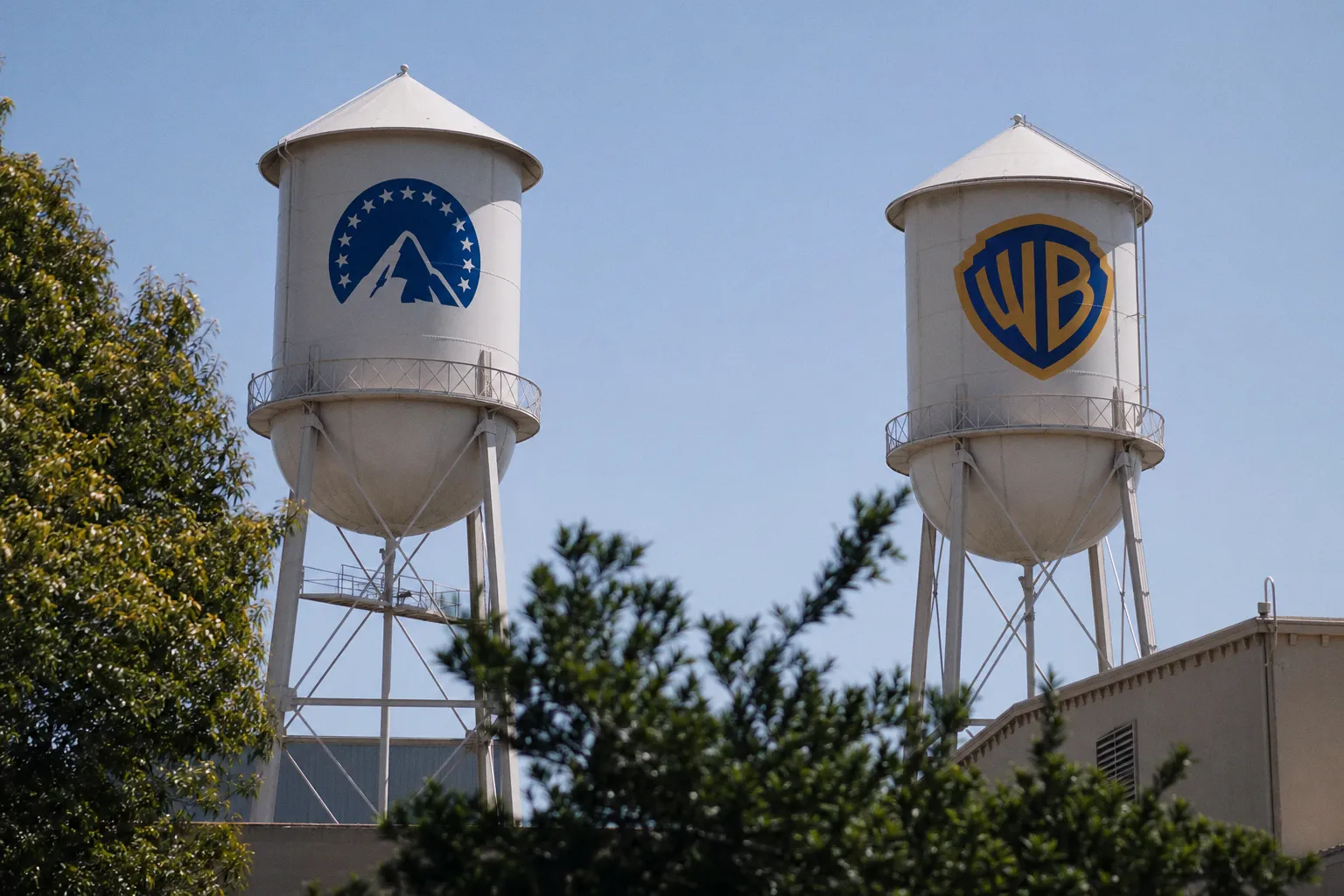
The states challenge the industry’s newest mega-structure
The lawsuit, led by California Attorney General Rob Bonta, targets Paramount’s reported $110 billion acquisition of Warner Bros. Discovery on antitrust grounds. California is joined, according to the report, by 11 other states, including New York, Massachusetts, and Oregon, with the case brought in the U.S. District Court for the Northern District of California.
The complaint argues that the merger would reduce competition in theatrical film distribution and cable television, harming theaters and pay-TV distributors. The states say the combined company would control 27% of the distribution market for films shown on screens across America, 30% of blockbuster film distribution, and 27% of the market for basic cable channels. In the language of cinema, that is not an abstract spreadsheet: it is the visual grammar of the marketplace itself, deciding which films receive scale, oxygen, and a meaningful theatrical life.
The coalition has asked Paramount and Warner Bros. not to close the merger until litigation is resolved. If the companies do not agree, the states intend to seek a temporary restraining order, according to the reported statement.
Why this matters beyond the courtroom
The suit arrives after the Justice Department’s Antitrust Division approved Paramount’s bid to combine with a rival studio whose assets include the Warner Bros. film and television studio, CNN, and HBO Max. That tension — federal approval on one side, state-level resistance on the other — gives the story its dramatic structure: a merger presented as strategic scale is now being reframed as a test of market power.
Bonta’s office argues the deal could reduce competition in theatrical film distribution, including “anticipated blockbuster films,” and in the licensing of basic cable television channels. His statement also frames the issue in cultural terms, warning that media consolidation in California could mean higher prices, fewer opportunities for stories to come to life, and fewer ways for audiences to encounter unfamiliar ideas and perspectives.
That last point is the one the film world will feel most sharply. Consolidation rarely announces itself in the texture of a single scene; it appears later, in thinner slates, safer bets, familiar IP, and a narrower sense of what counts as distributable. We see its shadow not only in boardrooms but in the pacing of a release calendar, in the fate of mid-budget films, and in whether theaters are offered genuine variety or merely the next pre-sold event.
What to watch now
The reported litigation could delay the deal for months and may add substantial costs for Paramount. Señal News also notes opposition from Democratic lawmakers, studio executives, actors, and others in Hollywood, with critics arguing that the merger could lead to job cuts and accelerate consolidation that harms consumers and creative talent.
For readers tracking the business of cinema, the practical question is not whether one studio “wins” the week’s legal skirmish. It is whether the industry’s future will be built around fewer, larger entities controlling both the prestige machinery and the mass-market pipeline. At a moment when capital is already being pulled toward scale-driven technology narratives — from streaming infrastructure to the broader market excitement around AI-linked chip stocks — Hollywood’s own consolidation story looks less like an isolated deal than part of a larger struggle over attention, distribution, and leverage.
The next meaningful signal will be whether Paramount and Warner Bros. Discovery agree to pause closing while the case proceeds, or whether the states move for a temporary restraining order. Until then, the merger sits in a suspended frame: approved by one federal antitrust authority, challenged by a coalition of states, and watched by an industry that knows distribution is never just logistics. It is authorship by other means.